By Themal Ellawala –

Themal Ellawala
By now, the article ‘Practical Solutions To Curb The Rate Of Rape’ would have made its rounds. I am willing to entertain the idea that the aforementioned article was written through genuine concern for the state of women in Sri Lanka, and for this sentiment I congratulate the author. However, the saying that there are many ways to skin a cat rings hollow in this particular instance as the approach Muhammed Fazl adopts is harmful to women, reinforces the inferiority of all non-male identities, and ultimately does little to solve the issue of rape and other forms of sexual violence.
Before I get into the meat of my argument, let me clarify. I identify as male and acknowledge my privilege. I have not experienced gender-based violence in its myriad of ways, unlike my sisters, female friends, and other women in Sri Lanka. I do not claim to be an authority on this topic. However, I believe it takes more male allies in our society to force dialogue and conversation about these topics when women are perpetually silenced or ignored. Secondly, I am not arguing only for the rights of the ‘Senoritas of Colombo’ to quote Muhammed Fazl (as grossly pejorative as that term is). While I cannot represent all the views and beliefs of those living in the peripheries, Sri Lankan society as a whole does suffer from a rather universal issue, as can be judged by the sad fate of Vithiya Sivaloganadan. Even if this was an exclusively urban issue, does not the suffering and pain of even one human being deserve our attention?
 I need to address the most glaring contradiction in Muhammed Fazl’s argument before I proceed with the rest of my musings. Fazl seems to believe that rape stems from depravities of the oversexed mind, and that the solution to this issue is segregation and restrictions imposed upon women. Rape is never exclusively a sexual act. It is motivated by the need to control and dominate (refer to a sampling of research if you do not believe me: here, here, here, and here). One study of serial rapists found that over one-third experienced sexual dysfunction and all rapists reported overall low levels of sexual pleasure. It is important to understand that power assertion plays a dominant role in sexual violence, and is inherently bolstered by misogyny that sets women up as weaker, dependent, and subservient. Policing female behavior stems from this same mindset that women are inferior, weaker, and need to be protected from the dominant males. Try as he might, Muhammed Fazl’s beliefs will not ‘protect’ women, but reinforce the culture that leads to their suffering.
The rest of his arguments seek to support this viewpoint, and these are what I will turn my attention to. He insists that perpetrators are a minority of the depraved, and the solution to this issue lies in focusing on this handful. And yet, not all serial offenders are intractable forces of nature that are destined to rape and plunder. Research shows that the environment they live in serves to reinforce or inhibit their instincts, and having friends who (even tacitly) support dominating women can predict the extent of a serial rapists actions. It is when society turns a blind eye to catcalling, prefers male children, and bandies words like pussy casually that the minority of offenders are emboldened to assault. As opposed to solely targeting individuals through a punitive approach, we must seek to educate all of society about the true nature of violence.
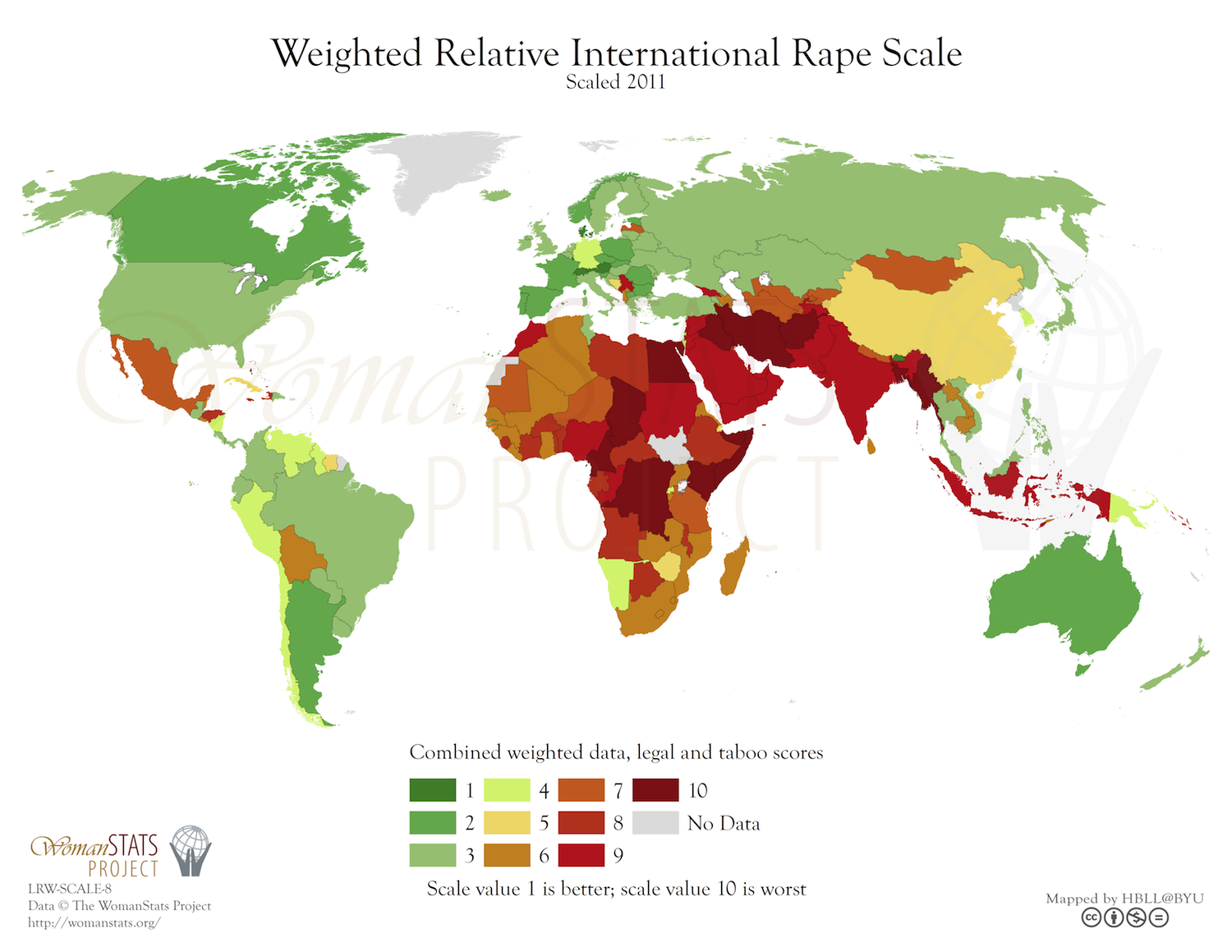
Muhammed Fazl claims that the highest incidents of rape are recorded in developed nations. I wonder if he has paused to consider the number of reasons that may confound this conclusion. Developed nations have codified a broader category of behaviors under the term sexual assault than the average Sri Lankan would consider, and there exists relatively more support to report the incidents, both of which contribute to higher incident rates. It is facile to believe that what is unreported or ignored does not exist or hurt. Likewise, his solution that women wear less revealing attire falls short of being effective in any way. In Egypt, 55 women are raped every day while the Middle East region scores abysmally low in the few studies that exist on rape incidence, despite the modest dress that women don. Despite calling for more research to be conducted on the relationship between modest attire and rape incidence, he is quick to propose more modest bathing attire as a part of his hefty 20-point plan! Mr. Fazl cites the Christian Monitor in claiming that Saudi Arabia has the lowest crime rates in the world, but enough high profile cases have demonstrated to the world as well as Saudi citizens how survivors of rape suffer by reporting crimes. If this double punishment does not deter reporting, then what will? To add insult to injury, Mr. Fazl claims that the sole motivation behind wearing ‘bits and pieces of clothing’ (in his own choice words) is to attract the opposite sex. The nauseating degree of heteronormativity in that statement aside, we must move past the myth that women’s brains work solely on the principle of attracting a man. Let us stop putting ourselves at the center of the universe. Is it so implausible that women could care about their appearance for themselves and prefer to dress in a particular way? And even if their intent was to attract someone, that should not make them vulnerable to unwanted attention. If the roles were reversed and men walked about in scanty dress (oh wait, they do!) would they be in any danger? Why do we expect men to act like depraved monsters while women are held to be the paragons of virtue? As a man, I am sad by the low expectations for my sex. We should strive for a society in which women are free to dress, seek attention, and consent as freely as men do, and men respect these choices.
I agree with Mr. Fazl that society does need to take up unveiled, uncensored conversations about rape. Bravo! However, sex education is an important part of that. The concept may not jive with our traditional culture, and I urge Sri Lanka to seek a common ground on this issue, but decades of demonizing sexual activity has brought us nothing but pain.
However, my sympathies with Mr. Fazl’s argument ends there. He follows this statement by saying that women will never be equal to men due to intrinsic gender differences. Modern psychology argues otherwise, but at a fundamental level I believe our equality stems from our common humanity, and no degree of differences will erase that. To deny equality to a particular group of people is to deny their humanity, and this is the underlying issue that must be addressed. To say that men and women are unequal due to differences is to say that a child is less human than an adult and deserves fewer rights and liberties. I cannot think of any humane and just society (which is what Mr. Fazl claims to speak for) that would embrace such an idea.
Muhammed Fazl claims that his opponents have failed to grasp the nuances of sexual assault, but I reflect on the irony of this criticism. First, he has turned a complete blind eye to the fact that all genders suffer due to sexual assault, and that hyper-masculinity leads to men assaulting men as well as women. Second of all, his suggestions monitor unknown males in communities, as oppose to the fathers, uncles, family friends, and lovers who perpetrate most forms of sexual assault. The idea to have separate seating in buses reminds me of the racial segregation that took place in America, and did not bode well for the fate of African-Americans in that country.
There is much that can be said of this magnificent 20-point call to arms, but for the sake of brevity I will part with these final words. Sri Lankan society has endured centuries of misogyny, hidden by references to our Sinhala-Buddhist culture, ‘Mother Lanka’ etc. We must desist with the segregating and stifling of women and realize that a permanent solution lies in holding our men to higher standards than the marauding beasts we expect them to be. It comes from affirming the choices of all women, from those who opt to wear the hijab or the reddai hattei to those who don a miniskirt. Power and privilege are our greatest vices, and the only high road for our society is to understand that all human beings suffer equally, and should enjoy the same ability to legislate for themselves. Our duty is to educate ourselves and society to the point that such freedoms are a reality.
*Themal Ellawala is currently pursuing his higher education in Clinical Psychology and is inspired in his work by the plight of racial and sexual minorities, as well as the struggles of all stigmatized groups for recognition and rights. He can be reached at themal21@gmail.com. He apologizes for his verbosity and the somewhat juvenile email address.