

By Godwin Constantine –
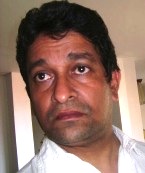
Dr Godwin Constantine
This is a great moment for Tamils, for Singhalese, for Muslims. This is a great moment for the country. Ultimately there is a feeling of relief, a hope that human dignity and democracy will be restored in this country.
The 2015 parliamentary elections were significant in many ways for Sri Lanka. Notably it is a watershed election where people from both sides of the ethnic divide have decisively rejected extremism. In the North, the Tamil National People’s Front (TNPF) which campaigned with an extreme Tamil nationalist stand, challenging the moderate Tamil National Alliance was unable to secure a single seat. In the South, the Mahinda lead UPFA campaign capitalized on communal hate politics and fear—such as fears of the re-emergence of the LTTE under the UNP government—but failed to maintain even the support they obtained in the Presidential election. More importantly the controversial Bodu Bala Sena, contesting the polls as Bodu Jana Peramuna, failed to win a single seat.
If the Sri Lankan general public is saying, “enough is enough; let’s move away from communal politics and get along with life,” will the present government listen to the faint voices of its people? If one considers the events that led up to the Presidential elections and its aftermath, and up to the parliamentary elections, we could sense that a democratic atmosphere, where people’s voices would be taken into account, was setting in. Of course there were hiccups in ‘yahapalanaya,’ with corrupt politicians raising their ugly heads once in a way, and wrong people being appointed for important positions. Nevertheless, President Mithripala’s efforts to put principles before politics need to be commended.
However, a major challenge facing the new government will be ethnic tensions. It has been and will be the main issue, which will test the international credibility of the Sri Lankan government. Thus far the president and the prime minister have taken bold steps to ameliorate the situation jeopardizing their own political popularity. The release of land from military control and reduction in the number of army camps, though small in measure according to some Tamil politicians, are significant steps in the right direction to achieve a lasting political solution.
At the end of war in 2009 Mahinda had an historic opportunity to find a lasting political solution for the ethnic conflict. He as the President could have used his influence on the masses to find a reasonable political solution. Instead, he chose to disregard the separate identities of different races in Sri Lanka and articulate a nonexistent monolithic Sri Lankan identity. During his tenure he concentrated on material development of the North-East in terms of building roads and restoring the damaged infrastructure, hoping that these measures would bring political dividends. The Ethnic conflict, however, was not based of material deprivation. On the contrary, when the ethnic conflict intensified – in the 70’s and early 80’s – the North and the East had thriving industries and flourishing agricultural prospects. There were train and bus services, and there were roads that connected the North and East to every nook and corner. All these were destroyed by the war.
In the 90’s the ethnic problem was mostly viewed as a ‘terrorist’ problem due to the extremist position taken by the Tamil militants. This overshadowed the root cause of the conflict and the consequences and the ramification of the conflict came to be the targets for action. As long as the root cause is not identified and sorted-out politically this conflict and uncertainty is going to remain with us.
In Sri Lankan Tamil politics the ‘Vaddukoddai Resolution’ was a watershed, which marked the transformation of Tamil politics to its extreme form, and ultimately resulted in armed struggle. Though the geo-political reality did not favor armed struggle, the logical growth of unsettled conflict resulted in it.
The ‘Vaddukoddai Resolution’ is an important document for many reasons. This Resolution needs to be revisited to understand the issue that has put this country in the present predicament. Reading this document closely one may wonder how many of the issue stated in the resolution are applicable to the present context.
Most of the issues stated in the Resolution have been solved or made unimportant by the open market economy. Some issues, though legally corrected, have not been changed changed in practice. The ‘land issue’ has assumed a different dimension in the post-war period. With the military occupation of civilian land and state sponsored activities to change the cultural and demographic patterns of areas in the North-East, the land issue is likely to be one of the major obstacles in finding a durable political solution for the ethnic conflict.
The second and a much more important issue facing Tamils is the right to live with dignity as Tamils in Sri Lanka. This is a very subjective issue which can be ignored or overlooked conveniently. However, Sri Lankan history is replete with examples of injustices inflicted on Tamils that have been rendered them inconsequential, probably by informal institutionalization of partisan attitudes.
These important issues can only be adequately addressed by adopting a reasonable power sharing framework. Meaningful power sharing while preserving the unitary character of the Sri Lankan state will benefit all communities. To achieve this all extremist views and dwelling in the past should be done away with. All communities should be ready to forgive and leave the past behind. Indulging in the past will prevent us marching forwards.
There has to be mutual trust and give and take between both communities to find a lasting solution. Erasing the ethnic identity or undermining the importance of ethnic identity will never lead to peaceful coexistence. It is the acceptance of diversity and adoption of an inclusive approach that will solve this conflict. We as Sri Lankans should ask ourselves, if a Sikh can become the Prime Minister of India or a Tamil speaking Muslim can become the President of India why can’t a Tamil or a Muslim become the Prime Minister or a deputy Prime Minister of Sri Lanka. Are we ready for it? Are we mature enough to accept it?
*Dr. Godwin Constantine – Senior Lecturer in Medicine, University of Colombo

