

By Rajan Philips –

Rajan Philips
The prelates of the Congress of Religions have called upon the people to “Leave aside political parties. Just concentrate on worthy candidates. … Think of the country and choose the best people from whichever party you’ll be voting for.” According to the Island’s lead story on Thursday, the prelates “excoriated” the major political parties for not abiding by the ‘March 12 Declaration’ and other pledges, after signing on to them, and nominating candidates who are known to have broken the law and/or to be in the business of drugs, gambling and prostitution. Let down by the leaders, the prelates appealed to the people to exercise their vote to prevent lawbreakers from entering parliament again.
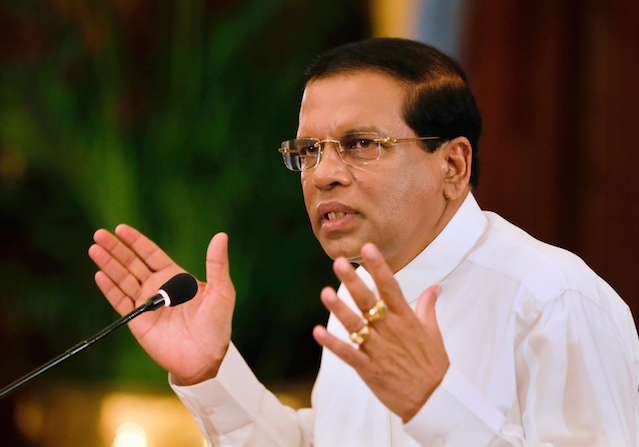
Independently issuing a political supplement to the moral call of religious leaders, former President Chandrika Kumaratunga has appealed to all members of the SLFP and all patriotic citizens to rise above party loyalties and vote for candidates who will protect and carry forward the victory achieved in the January 8 presidential election. On Friday PresidentSirisena added his voice to the midweek pleas of religious leaders and his favourite among the two former presidents. Speaking at a book launch ceremony at the BMICH, President Sirisena said “People should use their intelligence, knowledge and their experience of what happened in the past in casting their vote” and elect “only qualified and untainted candidates for the next parliament.”
These appeals to the voters are unprecedented because one cannot think of a past election when there was so much emphasis on the merits of individual candidates as opposed to the policy platforms of political parties. In fact, the emphasis is specifically on the demerits and unsuitability of many known individual candidates who are contesting the current election. The people are directly being asked not to vote for them. The appeals to the voters are not controversial because most people are fed up with the rascals who have been getting into parliament by getting their names on a party list. The January 8 verdict of the people was a collective rebuke against all the unqualified and tainted MPs and non-MPs who constituted the Rajapaksa regime. It was not just an individual verdict against President Rajapaksa.
The March 12 Declaration and other pledges for clean candidates arose in the wake of the January 8 verdict to ensure that the known undesirables of the old parliament will not be running for re-election in the new parliament. Yet, the former President is known to have insisted that every one of the MPs who supported his return to parliamentary politics should be given nomination regardless of their incompatibility with the criteria for good candidates that the UPFA leaders had signed on to in the March 12 Declaration. And with the exception of a handful of thugs, the others who are unqualified and tainted are on the UPFA list. The twin-secretaries running the UPFA, both lawyers, came up with the silliest of reasoning – that they could not exclude sitting MPs based on allegations of corruption or criminality insofar as the allegations have not been proven in court and the individuals have not been found guilty. One cannot get sillier than this in articulating political accountability. Not surprisingly they came in for “excoriation” by the prelates of the Congress of Religions.
The President’s criteria for PM
Things were not so easy under the first-past-the-post system because each party could have only one candidate (two or three in a handful of multi-member electorates) in an electorate, and political parties could not risk nominating someone who was a known undesirable in the local community. The proportional representation system based on lists of candidates prepared by party bureaucrats has made it convenient for known and unknown undesirables to sneak into parliament as MPs. Under the proportional representation system, the proportion of undesirables in parliament has increased significantly than it could ever have been under the first-past-the-post system. Equally, the presidential system seems to have spawned political thuggery to a far greater extent than it ever was prior to 1978. Until the 1980s, the countervailing social force against political thuggery was the trade union movement. With the trade unions gone or weakened after the 1980s, political thuggery has had no one to put it in its place. Ever since, the underworld has established itself openly on the political terrain.
Perhaps with the exception of the current President, every elected President is allegedly known to have harboured and/or used thugs for political purposes on a systematic basis. This was never the case with any of the Prime Ministers under the earlier parliamentary system, including JR Jayewardene before he became President. It was JRJ, known for his haughty candour, who famously said, after the 1981 riots which were orchestrated by UNP thugs, that the UNP was an open party and therefore it should not be surprising to find murderers, fraudsters and other criminals among its members. No one ever suggested that there was no corruption or criminality in Sri Lankan politics until the arrival of the Rajapaksas in Colombo. But the mistake they made was their attempt to personalize and perpetuate the system of corruption and criminality. In a BBC interview last week, Mahinda Rajapaksa admitted to no mistakes during his presidency, except the mistake of calling an early presidential election. It was not a mistake, nor was it an astrological blunder. It was a calculated move that spared an even bigger defeat two years down the road. But the question now is about the outcome of the election due in one week.
Unlike in a presidential election where one either wins or loses, political party leaders in a parliamentary election can both win and lose. They can win election as MPs, but their parties may not win enough seats to form a government. Mr. Rajapaksa will certainly become an MP from the Kurunegala District. But will the UPFA candidates win in sufficient numbers to form the next government? That is the question. The focus on the qualifications and merits of individual candidates and the appeals to voters to elect only ‘qualified and untainted’ candidates as MPs, target the candidates of the UPFA more than those of other political alliances or parties. If the appeals are successful, and if voters, whether persuaded by the appeals or acting independently on their own, choose to vote against candidates who do not belong in parliament, such a vote swing would be a significant blow to the UPFA. The eventual beneficiary could be the JVP more than the UNF.
In contrast to the enthusiasm that was evident during the campaign for the January election, the current campaign has been listless and uninspiring. The electorate seems tired. The UNF seems to be relying on winning more by default than on positive undertakings. There are also election sideshows; to wit, the exercising over a potential bridge linking Mannar to Rameswaram in South India; a body of economists caviling at the record of a six-month old government after sitting on their hands with their mouths shut for ten years during the Rajapaksa rule; and last but not least, the pathetic spectacle of public mud-wrestling involving the two ‘governors’ of the Central Bank. All in all the country seems to be heading to a hung parliament with President Sirisena standing by to hold and exercise the balance of power.
In light of his earlier assertion that he will not appoint Mahinda Rajapaksa as Prime Minister in the new parliament, President Sirisena seems to be laying down markers – such as “qualified and untainted”, to justify his assertion and to emphasize his intention to carry it through. The President’s assertion was initially dismissed by pundits as untenable. However, persuasive legal and constitutional arguments, in support of that assertion, have since been advanced by two prominent lawyers, Lal Wijenayake and Reeza Hameed. While the balance of political forces will ultimately validate or invalidate his actions, President Sirisena would seem to be on valid legal and constitutional grounds in his understanding of the presidential power to appoint “the Member of parliament who in his opinion is most likely to command the confidence of Parliament.” The President cannot be faulted if he were to look for an MP who is not only qualified, but also untainted. That would be in accordance with his January mandate and the constitution arguably empowers him to do that.

