

By Mahesan Niranjan –
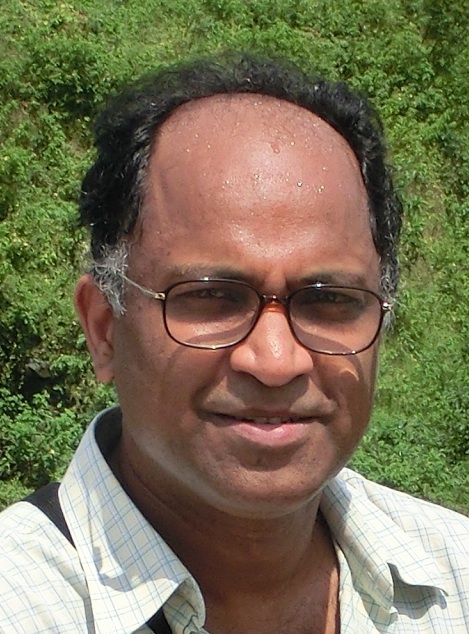
Mahesan Niranjan
As election fever heats up in Sri Lanka, I thought of catching up with my drinking partner, the Sri Lankan Tamil fellow Sivapuranam Thevaram, in our usual water-hole in Bridgetown, UK. Did I say water?
We are both card-carrying anti-separatists, believing very much in a Sri Lankan identity and a united Sri Lanka. Genetically, linguistically and culturally, inhabitants of the Island have more in common than chauvinists and nationalists might want us to recognize. Surely, that commonality should be the basis of our discourse on how best to build our political future?
Yet in conversations about Sri Lankan politics, we still find it convenient to carry out our analyses separately – using different sets of parameters for the South and the North. If you happen to be different, and have managed to view the political landscape of our country through a single analytical technique, we would like you to join us in the Bridgetown pub.
Stylishly, and predictably, Thevaram started our conversation with the remark “the country is at a crossroads,machan (buddy).” He certainly had in mind two facts that brought us to this junction: the end of the war in the North in May 2009 and the surprisingly peaceful change of government in the South in January 2015. The first ended, amongst other forms of suffering, brutality Tamils received from fellow Tamils in the name of a better future for Tamils. Yet Thevaram is not ready to celebrate that end by eating kiribath (milk rice) because tens of thousands of people also perished in the process. Adding insult to injury, the victor marked the defeat of the Striped Ones by celebrating victory over the whole community.
The second, a peaceful transition in which Maithripala Sirisena became president, ended a period of governance that took racism, thuggery and corruption to stratospheric heights. Six years from the end of the war and six months since the end of the Rajapaksa regime, the country is at the ballot box again. A crossroads, we certainly can agree.
“In the South machan, what Sirisena did was right,” Thevaram claimed. “He has thrown the responsibility at the electorate, so let them get what they deserve.”
Just before the Parliament was dissolved, Thevaram and I had discussed President Sirisena’s performance. Many who were delighted at the change in January expressed diametrically opposite emotions in this forum and elsewhere, to the extent of suggesting that Sirisena had betrayed the country. They had many reasons to be disappointed, the main one being not stopping his predecessor from contesting again.
But Thevaram disagrees. The impression Sirisena left in Thevaram’s mind by signing the Presidential Oath of Office with a five rupee ball-point pen has a large time constant of decay.
“He did exactly what he promised, machan,” was Thevaram’s defence of Sirisena. “He reduced the powers vested in his office and, consistent with that, did not intervene and micromanage, for example, by sacking Governor Mahendran.” Of course, we cannot judge from the Bridgetown pub if the Governor was dishonest or not, but there was enough in the sequence of events for him to have said “I don’t want to be an embarrassment to the Prime Minister, I will step down.” Instead, using a combination of schoolboy friendship, a touch of arrogance and, most importantly, incompetence in judging the damage he was causing, he continued to cling onto office. The bond issue controversy is one example of many things that can be attributed to incompetence during the six months of yahapalanaya (good governance) our citizens enjoyed.
This state of affairs may continue, or we may go back to the dark days of colourless vans, officials tying themselves to trees and rugby stars meeting car accidents. The choice has been given to the electorate: “Have what you deserve!”
Let us now turn towards the North. There is stiff competition for the few seats there. With one and a half dozen different parties contesting, the ratio of contestants to seats is among the highest in the Northern Province.
“Why is this so?” I asked Thevaram. “Maybe the Northerners, having been subjected to decades of oppression and been united at gun point so they may speak with one voice, are expressing their desire for democracy?”
“No machan,” he said, “you should seek parsimonious explanations.”
“We are a very enterprising community with a touch of herd mentality,” he continued, “During suddha (white Man) days, when people saw post master and railway station master jobs as lucrative with stability, uniform, free train rides and a pension, everyone aspired for such jobs. Later, when professional courses became available in universities, everyone went after engineering and medical jobs. Similarly, a job as an MP attracts fantastic perks unmatched in any other profession: salary, car import license, subsidised lunch at Diyawanna canteen and a pension. Why would they not compete for it?”
“What’s more, you don’t even have to do anything for five years!”
“Anyway, who will win in the Jaffna district machan?” I asked.
To this, I got a spontaneous answer of estimates with corresponding justifications.
“Zero for the Betel Leaf – on the basis of people remembering well the kiribath served on streets when the war ended; one for the Elephant — on the basis of their lead candidate having substantial support in her home village; one for the Veenai (musical instrument) — on the basis of localized support coming largely from personal favours splashed out from the occupied cinema theatre.”
“And there is serious danger of one for the Bicycle also –” Thevaram continued with a sense of unease, bicycle being the symbol of the Congress Party of Grandson Ponnampalam, “this on the basis of the disappointment people have had with the Tamil National Alliance who say different things to different people at different times, their inability to deliver anything and people falling for Junior Ponnampalam’s claim that his folk are the genuine torch bearers of the Striped Ones’ chinthanaya.”
“What will these guys do if elected to Parliament?” I asked in reference to the Grandson and his gang of three whom the TNA ditched back in 2010.

“Oh, their discourse is firmly rooted in the pre-1977 period machan,” he said in frustration, referring to the period that saw the fastest rise in Tamil Nationalist thought. “They will never realize the causal link between that chinthanaya and the massacre at Mullivaikkaal.” Continuing with a sense of anger he said: “Don’t underestimate their capability to create a situation for our people asymptotically looking like that in Gaza, of a continually suppressed population living in squalor behind walls, trading stone throwing for bombardment by high technology war machines. That is where the Seventies narrative is bound to take us – the repeating habit of history!”
After calming down a little with a couple of sips of Peroni, “And I think the remaining four seats will go to the House,” he said referring to the TNA.
“But isn’t the house itself made of four parts?” I tried to complete the picture, “verandah, bedroom, kitchen and bathroom put together jointly make the house, right?”
“True – and there will be the fun in all this,” Thevaram laughed. “We will end up with seven MPs representing one District in Parliament – one each from seven parties! Each of them will try to drag the Tamil people in a different direction.”
Reading between the lines, I thought Thevaram’s estimates and conclusions were biased. Does Thevaram actually want the Tamil National Alliance to win more than four seats? Is he a closet supporter of the TNA, I wondered.
“Would you want the TNA to win machan? Why?” I asked.
“Because I don’t like Tamil Nationalism,” he quickly replied, “which the TNA also don’t believe in.”
“What?” I expressed surprise, “They are called Tamil National Alliance, dude, and you say they don’t believe in Tamil Nationalism? It is in their name, man, in their name!”
“You can call yourself anything machan, you can even preach it, but that does not mean you have to believe in it, do you?” he said calmly, and went onto suggest many examples in favour of his claim.
“Is the Democratic Socialist Republic of Sri Lanka socialist?”
“Does the Pope believe in the Bible?”
“Did Mao Zedong believe in Marx?”
“Do Hindu priests believe in the Vedas?”
He fired these questions in such rapid succession that I had to excuse myself from the drinking table for apinkelpause.
“You yourself said the TNA are incompetent, so why do you think they should win?” I asked when I returned, reminding him of remarks he had made about the Northern Provincial Council on a previous occasion. Thevaram was then sharply critical of the Council’s performance on passing their genocide resolution and had said “these guys can’t do anything constructive – what good is this resolution supposed to achieve?”
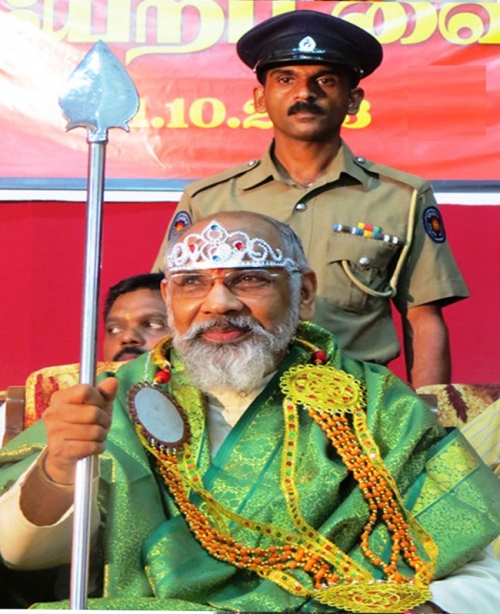
Thevaram had reasons to be disappointed. When the Council was elected with JusticeWigneswaran as its Chief Minister, Thevaram had expressed hope for the future and had even gone to the extent of preparing an alternate manifesto for them. In office, the CM had repeatedly complained that significant obstructions to progress came from the ex-military man, Provincial Governor Chandrasiri.
“He is used to ordering people around, so we have difficulty working with him,” the CM had said. But since January, with an experienced diplomat holding the office of Governor, can the CM show any constructive idea he (the CM) has had which was blocked by the Governor’s non-cooperation?
“Instead the CM has withdrawn into the narrative of digging into the semantics of certain words hasn’t he? The very same narrative — of our people having landed on this planet at a time when stones had been seen but sand not [Tamil phrase: kal thOnRi maN thOnRaak kaalam] — that failed to achieve anything useful since the suddha left the Island? Isn’t that incompetence?”
“It is precisely because of their incompetence machan, that I support them; see, the good thing is they can’t do any damage,” Thevaram explained, “after winning the elections they will go into deep slumber likekumbakaRNan (Ramayanam character – younger brother of the ten-headed patriotic Sri Lankan king Ravanan, who was the first patriot to bravely fight an invading foreign army on Lankan soil), occasionally wake up and make statements like proposing to kick a policeman or promising to engage in Ghandian style struggles, but in practice they will cause no harm.”
“Their characteristic incompetence will make sure of that,” he said stressing the word incompetence, making it clear to me that in the context of the politics of our country, this explained much, and was indeed something desirable — in the North and in the South.
“Cheers to incompetence,” we both raised our glasses to toast that useful trait.

