

By Dinesh D. Dodamgoda –
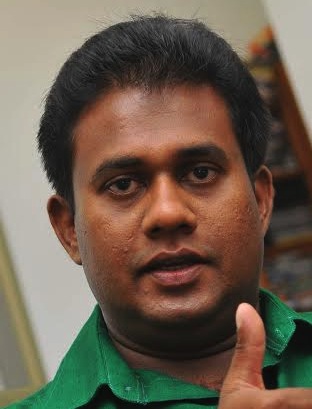
Dinesh Dodamgoda
Former President Chandrika Bandaranaike Kumaratunga now as the head of the Office of National Unity and Reconciliation has declared her three main priorities. They are taking back land from the Sri Lankan army, investigating disappearances of Tamils, and resettling the displaced, the Indian Express reported.
There is no doubt that the task of resolving those issues that included in Ms. Kumaratunga’s priority list is important and good in terms of winning hearts and minds of the Tamils. However, the question is that whether this is the best way to initiate a sustainable reconciliation process in ethnically polarised and deeply wounded post-war Sri Lanka?
Statist Diplomacy
The approach proposed by Ms. Kumaratunga concerns with starting the process of reconciliation by resolving issues through direct government initiatives. This approach is clearly a traditional statist diplomatic approach that adopts frameworks and activities to reconciliation aiming at initially resolving issues through the ‘top’ level government initiatives.

However, as one of the subject experts and a practitioner, Professor John Paul Lederach, who adopts a practitioner’s approach to reconciliation emphasises, ‘the nature and characteristics of contemporary conflict suggest the need for a set of concepts and approaches that go beyond traditional statist diplomacy’. Accordingly, the most important task would be to adopt an approach to focus on restoration and rebuilding of relationships between divided groups, because reconciliation will endure if it is sustained by a society-wide network of relationships and mechanisms that reduces enmity which can regenerate destabilising tensions.
Weaknesses in the Approach
Ms. Kumaratunga’s proposed priority list is aiming at winning hearts and minds of the Tamils by the UNF government. However, her approach would allow Sinhala Nationalists to argue that there is no reference in the Office of National Unity and Reconciliation’s priority list to address issues faced by the Sinhalese (whatever the issues maybe) and furthermore, extreme groups would go further and accuse the UNF government that it will give everything that the Tamils want and will continually ignore issues faced by the Sinhalese. Therefore, the proposed priority list which aims at only addressing issues relevant to the Tamils would generate counterproductive effects in terms of restoration and rebuilding of relationships in an ethnically polarised post-war Sri Lanka, because the approach would win the Tamils whilst antagonising Sinhala Nationalists and extremists.
On the other hand, the approach adopted by Ms. Kumaratunga in declaring a priority list implies the Office of National Unity and Reconciliation’s intention to rely on a government centred approach to reconciliation. This is a ‘top-down’ approach that mainly rely on ‘Top Leadership’ that include political, military, religious leaders with high visibility that focus on high-level negotiations. The ‘top-down’ approach is not the best approach we should adopt at least due to the following reasons.
1. The top-level agreements that the top level leaders reach can be irrelevant, if a consensus was not reached at the middle and the grass-roots levels of the society. Hence, those agreements are incapable in convincing and converting people at local levels. It is important to understand that top-level leaders are not the exclusive power holders of the society and power is more diffused and fractioned than generally perceived.
2. Top-level political leaders are generally ‘locked into’ pre-agreed opinions and vulnerable to international pressures. Therefore, they do not have a much of freedom of manoeuvre in challenging those pre-agreed opinions and international pressures. Furthermore, more often Top-level political leaders are the maintainers of the status quo as their political survival is very much depend on the status quo. Therefore, top-level leaders and approaches are unreliable in promoting reconciliation and may not challenge pre-agreed opinions, international pressures and the status quo that they try to maintain for their own survival.
The Best Approach
The most important task in the reconciliation process is to win trust of the Tamils by the Sinhalese, and visa-versa. The task should be achieved through a process of restoration and rebuilding of relationships between polarised ethnicities. It is a community based approach. Therefore, we need to initiate things not from the top, yet from a place where we have the ability to shape opinions of the Sinhalese and the Tamils in order to bring them to an ideological middle ground.
Therefore, my proposition is to have a ‘middle-out’ approach through Middle-Range leadership. Middle-Range leadership (we can call them Opinion Leaders) comprises leaders respect in sectors that they represent such as ethnic / religious leaders, academics / professionals / intellectuals, and civil society leaders that include NGOs who can influence grassroots as well as the top leadership. The Middle-Range leaders have the capacity to shape opinions in the grassroots as well as the top leadership and hence, the Middle-Range leadership is the best medium to reach grassroots and the top-level. Moreover, the Middle-Range leadership is suitable at least for the following reasons as well.
1. Although the Middle-Range Leaders have contacts with the Top Leadership, they are not bound by the political rationales that control actions and decisions made at the Top Leadership.
2. Furthermore, the Middle-Range Leaders understand the situation at grassroots level and are sensitive enough to grassroots experiences. Unlike the grassroots communities, the middle range leaders are not disturbed by the day to day survival mentality and grassroots’ emotional urgencies.
3. The Middle-Range Leaders often have already established relationships with their opposing counterparts, for example, through intellectual, professional and civil society organisations that they represent and therefore, are instrumental in influencing the society vertically as well as horizontally.
Thus, with regard to an appropriate approach, my proposition is that the Office of National Unity and Reconciliation should have a Middle-Range approach and need to build Middle-Range Leaders’ capacity to carry out reconciliation process and deliver messages to the grassroots. We must not forget that our society is an ethnically polarised society. There are extreme Nationalist groups on both sides. Therefore, our approaches and priority lists should not lead to further deepen the polarisation.
The Role
The Office of National Unity and Reconciliation needs to understand that especially at the initial stage the Opinion Leaders (Middle-Range Leadership) in the society have a leading and a direct role to play in initiating the reconciliation process than the role that should be played by the government. As said, the reconciliation process is a restoration and rebuilding of relationships. Therefore, the Office of National Unity and Reconciliation should start identifying and forming society-wide Middle-Range leaders that can influence divided groups through shaping their opinions to find an ideological middle ground where different groups can be reasonable to each other.
There are so many ground works that the Office of National Unity and Reconciliation has to do and that includes providing material and human resources that the opinion leaders need in carrying out their tasks, forming groups and organisations of opinion leaders in order to organise workshops, educating people through different mediums, facilitating interactions, conducting psychosocial reconstructions programmes, etc.
The most important thing is that the Office of National Unity and Reconciliation let the society initiate the reconciliation process and progress with it. The Office of National Unity and Reconciliation should play the role of a reliable and an impartial facilitator in the reconciliation process than playing the role of a ‘Boss’. Then only the reconciliation process would truly have a community based approach that can implement a successful process of sustainable reconciliation.
As Ms. Kumaratunga told, “It’s a very big responsibility and a golden opportunity”. It is because, in my opinion, this is the last opportunity that the country has for a foreseeable future to bring sustainable peace by breaking the cycle of hatred and mistrust.
*Dinesh D. Dodamgoda, a Fulbright scholar and a lawyer, has a M.Sc. degree from the British Royal Military College of Science, Shrivenham (Cranfield University) on Defence Management and Global Security. He was also an MP from 1995-2000.

