

By Mahesan Niranjan –
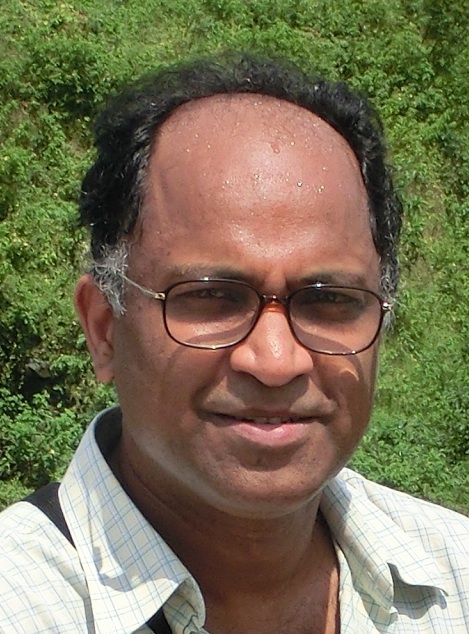
Mahesan Niranjan
Any discussion on the politics of Sri Lanka has separatism as its background. Try saying that the Tamil people who live in the island have certain specific problems because they are Tamils and you will immediately be called a separatist. That you may not be inspired by that idea will be irrelevant. We have been conditioned by our political masters and authoritative texts of history that any issue to do with this part of our population is about ganging up with their mates across the Palk Strait and pushing into the sea what is a unique culture and religion not to be found anywhere else in the known universe. That the last time a fellow from Tamil Nadu came across to fight the Sinhalese was several hundred years ago does not feature in that calculation. True, the Sri Lankan Tamil rebels found safe havens there every time they were on the run, but we forget that this was more to do with the failure of Colombo-Delhi diplomatic relationships than any desire on the part of Tamil Nadu folks to beat us up.
“Believe me, machan (buddy), separatism does not work,” my friend Thevaram, the Sri Lankan Tamil fellow said to me during one of our drinking sessions at the Bridgetown pub. He had made up his mind on the subject, overhearing a conversation between his father, Sivapuranam, and his friend Kara.
“The negotiations failed because the Tamil fellow gave in too soon, machan,” Uncle Kara had lamented in that conversation.
Who is Uncle Kara and what were the negotiations about?
Kara is short for Karapigngna Aarachcige Percival Umbalakada. He was a close friend of Sivapuranam from their Hilltop university student days. You will recognize from the structure of his name, particularly the “ge” at the end of the second token that he is of Sinhala ethnicity. Kara was a teacher and a trade unionist from the negotiating team of the Ceylon Teachers Union.
Note the use Ceylon in Ceylon teachers Union. This story is from the period October 1971 to January 1972, around the time when Queen Bee – the then Prime Minister – was putting the final touches to the Republican Constitution to be enacted a few months later.
Let me tell you a story about the token Umbalakada in Uncle Kara’s name (of course the name is not real. I don’t want to reveal his true identity). Back in 1956, the then Prime Minister King Bee introduced what was known as the Official Languages Act – passionately dubbed Sinhala Only Act by those at the receiving end of it — in Parliament within 24 hours of being elected to office.
Those days, we were more efficient and time was measured in hours (compare with modern practice of measuring time in blocks of 100 days), and our politicians also kept some selected promises made to the electorate.
An uncle of mine in Jaffna studied the official language in order to enhance his employment prospects. After a few weeks of learning theory, he moved to the beautiful town of Haputale in the hill country and put his knowledge to practice. But be warned. The difference between theory and practice is more in practice than in theory, have you not heard?
One day, at a restaurant where he went to have breakfast, he thought of trying a dish he was told was exceptionally tasty: Umbalakada Sambol.
He asked for umbalage kade sambol.
Now Umbalakada sambol is the tasty dish made of a particular kind of dried fish. The inadvertent little “ge” in the middle changes the meaning of the phrase into a rather rude “dish from the shop of you buggers.” Note how that tiny morphological change leads to such profound semantic difference.
It is possible that such a rude demand from a Tamil fellow might have carried the political connotation of “one day I will gang up with my mates from across the Palk Strait and push you chaps into the sea” in the perception of the recipient. No wonder my uncle was thrown out of the shop without being served any breakfast.
Let’s get back to our main story about the trade union.
Ceylon being a country with majority Sinhala and minority Tamil, the committee and negotiating team of the teachers’ trade union, chosen by a democratic process – rightly so, as the majority of us will say– was dominated by Sinhalese.
Tamils felt they had no place there. They solved the problem by separating from the union and started their own trade union.
Initially called the Thamiz Aasiriyar Sangam (Tamil Teachers Union), it was one of the earliest inventions of separatism in the country, as historians would note.
But they had a problem with the name.
Centuries ago, teaching and learning Tamil language was fashionable. Tamil poets of the Sangam period, for example, created magnificent literature in that language, exceptionally rich in style and semantics, thoroughly enjoyable to this day.
In modern Jaffna, however, it was Physics and Applied Mathematics that earned you bigger dowries. Teachers of Tamil language were kind of seen as considerably lower in that social hierarchy.
So just in time before letter heads were printed, the new union changed its name to Thamizar AasiriyarSangam (trade union of ethnic Tamil teachers). Note how the tiny morphological modification (Thamiz to Thamizar) has such profound semantic change. They had their own committee and negotiating team, all of Tamil ethnicity. Problem solved by separatism, some might think.
Teachers across the island were in dispute with Queen Bee. There were generic problems that mattered to all teachers in Ceylon. Examples include low pay, nepotism in making appointments and political victimization.
Then there were problems specific to Tamils, because they were Tamils.
For example, everyone wanted to teach in just the five popular schools in Jaffna and disliked being transferred to the tea-estate schools in Haputale, where you had to teach children of Tamils of recent Indian origin. The purpose of educating them – the people who we have so unfairly kept under semi-slavery conditions even decades after the suddha (white man) left – was never explained to anyone. Of what use is Physics in plucking “two leaves and a bud” of tea?
To try and solve the industrial dispute, the negotiating teams of the Ceylon Teachers Union and the Thamizar Aasiriyar Sangam were invited to a meeting with Prime Minister Bee.
Now Queen Bee had travelled widely and made many friends. While Messrs Castro and Tito were also among her circle of friends, it was the friendship she cultivated with Mrs Gee in India and Mr Chou in China which were important for our little island. In India, she had picked up a new word “chai” (tea) which she mispronounced as “cha.” Premier Chou had presented her with some nice china in return for the baby elephant she gave him.

We can imagine conversations in the Prime Minister’s household, can’t we?
“Putha (son), you want some cha, darling?”
“No ammi (mother), I have some stuff in the imported bottle, no!”
At the negotiating meeting, Mrs Bee served chai in the posh china from Chou of China, which the Thamizarnegotiator was particularly impressed with.
“Cha,” he said.
What he meant was “sha” (an exclamatory expression meant to express how cute something is), but in classic Tamil phonetics, there is no difference between /sha/ and /cha/. He was so impressed with the china that every time he looked at the tea-pot, he said /cha/.
Mrs Bee thought he wanted more tea!
You cannot blame her. She had just picked up the word from India, which is where she understood these Tamil people had come from. Just like in the story of the Trojan horse, one day they will bring their mates from India and dump her tribe into the sea, she had studied in authoritative books of history. Clearly, it was diplomatic to show off the word she had recently learnt to make this guy feel welcome! And that was having an effect, too.
So, every time he said cha she poured more and more chai into his cup – of lovely china from Chinese premier Chou.
Those familiar with positive feedback will know this is an unstable situation. As he drank more of the stuff his bladder was getting filled and the pressure down there was far more urgent to deal with than any Thamizar-specific problem he had come to solve.
The negotiator capitulated.
“We will do as you say, Madam,” he said triggering the collapse of that round of negotiations, much to the disappointment of Uncle Kara of the Ceylon Teachers Union.
Teachers of Ceylon continued to be paid a pittance. Nepotism in appointments and political victimizations continued. Thamizar teachers continued to be transferred periodically to estate schools of
Haputale where they wondered: “Of what use is Physics in plucking two leaves and a bud?”
“Problems are not solved by separatism, machan,” said Thevaram.
“Sha,” I said, showing off my perfect phonetics of the “Northern language” (vadamozhi), which I had acquired in the South of Sri Lanka.

