

By Saliya Pieris –
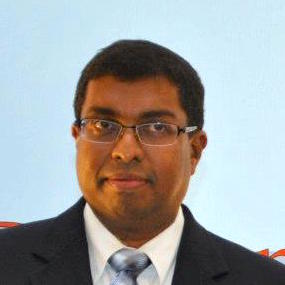
Saliya Pieris
The frenzied calls for the death penalty
The tragic death of five year old Seya has led to frenzied calls for the implementation of the death penalty in Sri Lanka. President Maithripala Sirisena himself weighed in on the question last week when he announced that he will place the question of the death penalty before Parliament. Social media has gone viral with online petitions and calls for the immediate restoration of executions , assuming that is the panacea for crime. One online petition subscribed to by several thousand probably educated and intelligent people , even called for the execution of child abusers without trial!
Such knee jerk reactions seeking to resume implementation of the death penalty are fraught with risks and dangers, the most serious of these dangers being the very real risk of innocent people being executed as a result of being victims to a flawed justice system.
Never abolished
The death penalty in Sri Lanka has never been abolished. Day in and day out the High Courts in different parts of the country impose death sentences on accused found guilty of capital crimes, chief among them the offence of Murder. Apart from Murder there are only a few other Penal Code offences attracting the death penalty. However there have been no charges brought under these sections for decades such charges being waging war against the State and fabricating false evidence leading to the execution of an innocent party. Abetment to suicide also attracts the death penalty although suicide attempted suicide is no longer an offence. Other than murder the crime which attracts the most number of death sentences in Sri Lanka is the possession or trafficking of over 2 grammes of heroin.

*Five year old Seya
Passing the death sentence
When a High Court Judge finds an accused guilty of a capital charge the accused is asked whether he has anything to say before the sentence of death is passed. Whatever the accused says is recorded and thereafter forwarded to the President. In one instance, in the High Court of Galle I prosecuted a man charged for the murder of six people at Yakkalamulla. The jury found him guilty. When he was asked what he had to say (in legal parlance this is caused allocutus) he jumped out of the dock and came upto the jury and told them “Umbalawa Maranawa (I will kill you). In another incident in Negombo a family of three were found guilty of murder upon the evidence of a witness who was pregnant when she gave evidence. The third accused who was the father of the other two accused, cursed the woman and the child in her womb saying that the she had given false evidence.
After allocutus the lights and fans of the Court house are switched off and the court crier cries out for all to rise as the court is to pass death sentence. The High Court Judge reads the sentence ordering the accused to be taken to the Welikada Prison and within the four walls of the prison that on a day and time appointed by the President that he hangs by the neck until he is dead. In the olden days the judge will before passing sentence wear a black cap and after sentence break the nib of his pen to signify the unpleasant task that he has done.
Even though everyone knows that the death sentence is not implemented nevertheless it is an unnerving experience for all. Lady prosecutors, court staff and jurors sometimes break into tears, members of the families of the convicts weep and mourn. Some High Court Judges hate to pass the death sentence. The court house for a few minutes turns into a virtual funeral house until the accused are taken away.
The appeals process
The accused is thereafter placed on the death row of the prison. However in almost all instances accused , do appeal to the Court of Appeal and thereon to the Supreme Court, if the appeal fails in the Court of Appeal.
The death warrant
Once the appeals are exhausted, it is the President who will have to sign the death warrant appointing the time and place of execution. The Constitution lays down that before the President places his signature , he is required to call for reports from the Attorney General and the Trial Judge which are thereafter submitted to the Minister of Justice who in turn submits them to the President with his advice whether or not the execution should be carried out. Then armed with the advice of the Minister of Justice the President must decide whether he should implement the execution or decide to commute the sentence to a lesser period which may be life imprisonment or less.
Since 1976 no President of Sri Lanka has signed the death warrant, the last one to sign a death warrant being President William Gopallawa. Generally the sentences are commuted to life imprisonment and then further reduced.
In one sensational murder case known as the Vicarage murder involving double murder Fr. Mathew Peiris came out of prison in 1998 after about 15 years, and died shortly afterwards a free man. In recent times there has been no commutation of sentence, but no implementation either keeping the death row prisoners in a state of limbo.
The deterrence argument
The biggest argument of the howling mob calling for the restoration of the death penalty is that it will be a deterrent to crime. No where has it been proven that imposing the death penalty reduces crime or deters accused. Some may argue that a country like Singapore has minimum crime because of capital punishment. However it is more likely that the general discipline that Singapore has instilled in its society coupled with a well oiled law and order mechanism and an effective justice system has led to there being lesser crime. In the United States death penalty has not reduced crime. Criminals often commit crime without considering the risks, whether it be execution or a life time in jail it does not matter to most of them.
The arguments against the death penalty
Despite some inbuilt safeguards such as the appeals process and the recommendations being called from the trial judge, prosecutor and Minister of Justice, nevertheless there is always a real danger of an innocent man being executed. Not only in Sri Lanka but anywhere in the world.
Firstly from a purely moral and ethical point of view there is the argument that execution is immoral and the State should not take away human life. Many countries in the civilsed world have moved away from the death penalty. Throughout Europe and in Australia the death penalty has been done away with. In most parts of the United States executions have either been abolished or moratoriums have been imposed. Even in India executions are very few and far between. Of course China, Iran, Saudi Arabia vie with each other to top the scores in executions.
From a human rights point of view the death penalty is frowned upon . The second optional protocol to the International Covenant on Civil and Political Rights calls for the abolition of the death penalty, as does the European Union.
One strong argument is that death penalty amounts to cruel and inhuman punishment found in Article 11 of our Constitution. Article 11 is one of two articles of fundamental rights over which no limits or restrictions are placed. No one in his right mind can claim that executing another human being is not inhuman or cruel. In the United States, there have been successful arguments against the mode of execution, on the basis that the prisoner suffers immensely before dying and that alone amounts to cruel treatment. As such in some States such as California although the death penalty remains on the books, executions have been stalled as a result of the inability to find the right method of execution.
Killing the innocent
The most important argument against restoration of the death penalty is that there is a high risk of innocent persons being convicted. Innocent persons can be implicated for several reasons. In Sri Lanka witnesses are notorious for giving false evidence and for embellishing their evidence. When the perpetrator is one member of the family witnesses especially those partial witnesses tend to implicate other members of the family too. Prosecutors know that these are not rare occurences. Added to that the Sri Lanka Police is woefully incompetent at investigating crime apart from certain specialised units such as the CID and CCD. The use of scientific methods such as DNA and fingerprinting are rare and far between. Sri Lanka simply does not have resources to use scientific techniques.
Police almost never investigate the defence version in order to verify what the accused and his witnesses may be saying. Police in very many instances do not even bother with recording the statements of the defence.
Adding to this are the numerous allegations against the police for falsely implicating persons in crime. Corruption within the police force add to both false implications and failure to investigate the defence.
Many are the stories of police falsely implicating people on drugs and offensive weapons charges. There have been instances of police foisting drugs or bombs on innocent people. Judges, prosecutors and defence lawyers know these do happen. Apparently there are sometimes spare bombs and drugs available to use when needed. Unfortunately no independent investigations have been done in Sri Lanka against police fabrications where judges have expressed serious doubts on the truthfulness of the police versions.
There are yet again times when the witness is not lying but is mistaken and mistakenly implicates an innocent man. Human error may lead to this especially where identification is involved.
Cases of miscarriage of justice
One may argue that the trial and appeals process offers safeguards. Once the appeals process is exhausted there is no mechanism in Sri Lanka to review the cases where people have been wrongly convicted or where fresh evidence surfaces or doubts raised after many years. In the United States , Canda and the United Kingdom there have been several occasions where people wrongly convicted have been released from death row or prison decades later. In the US concerned people have established organisation to deal with cases of miscarriage of justice, such as the Arizona Project. In those countries in fit cases the courts have moved in or special mechanisms established by law and innocent people falsely convicted not only released but also compensated. We in Sri Lanka have no such safeguards.
Failures of the legal profession
There are many instances where the accused is not properly defended. Sometimes lawyers fail to take up the defences they ought to take. In one instance a woman had attacked her husband killed him and thrown his body into a latrine pit. However she did so when the man in a drunken state had attempted to rape their teenaged daughter. For some reason, her defence Attorney never raised the issue and she was found guilty of murder and sentenced to death.
In the High Court if the client is unable to retain counsel, counsel are randomly assigned by the Court. Assigned counsel are often young and untrained and inexprerienced. They are paid five thousand rupees for the entire case. Some assigned counsel take up their cases with enthusiasm. Others do not. Accused not having means to retains counsel are depending on the luck of the draw. One senior criminal counsel who had defended a client as an assigned counsel told me he wished he had had more experience when defending the particular client. This man had been found guilty and executed.
The role of the prosecutors too are sometimes called into question. Some go for the jugular while others decide they have a superior duty in being fair. A retired judge of the Court of Appeal, one time a trial judge told me how he decided to convict a man on a drug charge carrying the death sentence, but on the night before the judgment pondered over the same and changed his mind. After acquitting the accused the prosecuting counsel had come to him and told him that it was a good thing that he acquitted because the police had confessed to him during the trial that their story was not true.
Judges
What of judges? Judges are not infallible. They make mistakes just as the rest of us do. They have to act on the evidence before them. Sometimes false evidence can be presented as true and even the sharpest judge may not see through false and fabricated evidence. He might not realise that the witness is mistaken.
Judges too have their own idiosyncracies and prejudices. Some judges give the accused a fair trial and realise his version may well be true. However there are other judges who believe that the police can do no wrong. They simply believe the prosecutor’s version. Some judges fail to offer the safeguards that a fair trial has to offer. They refuse to see that another point of view, another version may well exist. This is true in any part of the world.
Although not always so, the abilities of at least some judges and their impartiality are also sometimes called into question.
When it comes to the appeal process the same flaws may exist. However the judges in appeal do not have the same benefit that judges do at the trial stage. The same shortcomings that exists among trial judges may exist among appellate judges too. Fresh evidence is almost never allowed in appeal and mistakes of the defence can rarely be rectified.
Conclusion
When the irreversible consequences of the death penalty are considered one cannot but help think that it will be once again the oppressed and downtrodden who will have to face the consequences of ill considered decisions which are not rational or objective but done to appease the crowd. There will be innocent men and women who will have to pay with their life. The death penalty can never be equated to justice. After all the death of innocent men and women can never give justice to the victims of crime.

