

By S. Sivathasan –
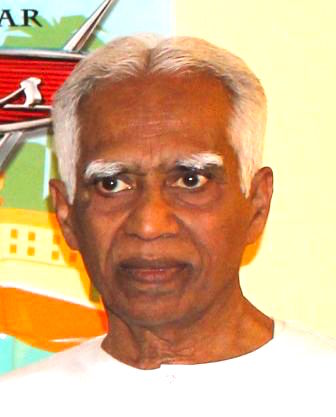
S. Sivathasan
If the Sri Lankan nation is to go forward, the polity needs to take the Tamils into confidence. They have to move together. The Tamils in turn need to act in a manner to inspire hope and reliance among the communities. With neither party taking the initiative, there is not even a glimmer for either. So too for other minorities. This writer has asserted this position consistently since the end of hostilities.
The sheet anchor for unification is economic parity – of opportunity and reward. The whole complement of supportive factors together with capital, training and a contented hinterland of the community will have to obtain for wholesome results to be seen. The spread needs to be equitable.
Lessons to Learn from Germany
Modern Germany provides quite a few lessons for Sri Lanka. The comparison may look odious, but the parallels are very telling. West Germany (WG) and East Germany (EG) were split up in 1945. The compartments were watertight. This arrangement stood till 1989. In the eighties in Sri Lanka, the writ from Colombo did not always reach the extremities in the North East. The situation persisted till 2009. The collapse of the Berlin Wall in October 1989 brought East and West together. In Sri Lanka the Tamil offensive collapsed in May 2009. But have North and South come closer? No. Why?

Germany, described as a geographical expression or a collection of principalities till the Napoleonic wars up to 1812, was welded into a nation in 1971. This nation had 91.5% Germans, 2.4% Turks and five other ethnicities forming 6.1%. In contradistinction, Sri Lanka at independence had 71% majority community and 29% minorities of other ethnicities and different religious persuasions. In a century was there ever an earnest effort to build a national consciousness?
Instead what was done? Minority strength was reduced from 29% to a questionable 25% through legal repatriation and forced expatriation. Their voice has been whittled down and is being further muzzled in representative assemblies. Following that frivolous questions are asked most abrasively, why can’t a Tamil say he is a Sri Lankan and not a Tamil? Why can’t a Muslim say he is Sri Lankan? Why should a Christian think first of his religion? How can they, when they are cast out as outcastes? Why should they when they are pressed into the most marginalized nook? Frivolous questions have cost the country trillions in rupees and lakhs in lives.
Economy of East Germany
See what the Germans have done. At the time of reunification in mid1990, per capita income in East Germany was Euros 9,400. West Germany had Euros 22,000. In 2012, East Germany more than doubled her income to Euros 23,700. In the same year, West increased it to Euros 33,400. East and West growing apace with the East moving more than evenly. Recent reports say that disparities between the two economies have very nearly disappeared. How did this come about?
West Germany went about proactively implementing affirmative policies and programmes to take East Germany on board and to sail together. In the 25 years after reunification, the West ensured that investors spent $ 2.02 trillion on infrastructure, housing and businesses. What was the outcome?
In East Germany productivity levels in 1989 were 25% that of West Germany. Now it is 75%. At the commencement itself, between 1991 and 1997 per capita income in EG grew 60%. This level was comparable to the ‘German Miracle’ for the same duration 1950 to 1956.
When EG was divested of millstones – MILTARY OCCUPATION – round its neck, it bounced back with remarkable resilience. East Germany also had the benign patronage of West Germany which was intent on the success of their ethnic compatriots.
Sri Lanka and Tamils
It is axiomatic that where ethnic diversities exist and regional disparities prevail, the effort of the majority community should be redoubled to strike an equitable balance. Such an attempt was never made when the end of the war called for fresh responses after 2009.
Taking GDP growth in Provinces as a measure of economic performance, it is noted that between 2008 and 2012, Western Province where the capital is located had a GDP share of 45.4% in 2008 and 43.4% in 2012. The Northern Province, the main theater of war and destruction had the lowest share among all 9 Provinces, at 3.2% in 2008 and 4.0% in 2012. The government’s concern to redress the balances of the old is nowhere evident.
Military Presence in East Germany
The four Allied Powers were engaged in military occupation in the period 1945 to 1990. Military strength was heavy and their presence to rub defeat in, was most irksome to the Germans. The hegemony of Russia and the imposition of the Soviet system in governance and in the management of the economy were most constricting on East Germany. With Gorbachev’s Perestroika, there was a reduction by June 1989. The Russian Ground Forces had left Germany by June 1994.
Contrast in Sri Lanka
In Sri Lanka, a redundant military is yet to move out. The internal war lasting decades, ended in May 2009. Military occupation of the North at one per 5 citizens, vexes the Tamils grievously. Heavy military expenditure after war ended six years ago, merely to spite the Tamils takes the country nowhere. To borrow a phrase describing Soviet Union’s overspending, continuing the same practice will ‘spend Sri Lanka into the grave’.
Does that approach portend the beginning of a new economic order, or the commencement of an era of reconciliation? Sri Lanka needs a sea change about downsizing the military, redeploying it outside the North and crucially curtailing defence expenditure. Most importantly, the ethnic entities have to address their tasks at redemption singlemindedly.

