

By Izeth Hussain –
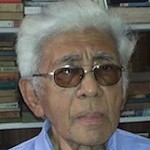
Izeth Hussain
I believe that in recent articles I have established certain positions about Sri Lanka’s Tamil ethnic problem: 1) Problems have a protean character, they keep changing in the course of time, so that our ability to handle them depends on whether or not we perceive and conceptualize them accurately at a given time. 2) The core problem is the Tamil Nadu factor, not a purely indigenous Tamil ethnic problem. 3) The solution has to be through democracy, not devolution. If I am correct in thinking that the core problem is the Tamil Nadu factor, it follows that the international dimension of the Tamil ethnic problem is of paramount importance, and the solution can be facilitated or hindered by whether or not the Sinhalese and the Tamils perceive and conceptualize that dimension accurately. Neither the Sinhalese nor the Tamils have done so.
The Tamils have tended to overestimate the power of the international dimension to determine ethnic outcomes in Sri Lanka, while the Sinhalese have on the whole tended to underestimate it. Some or perhaps many Tamils have the naïve belief that the so-called right of self-determination can be invoked at the proper time to get the international community to back the establishment of Eelam. I have demonstrated in earlier articles that the international community recognizes no such right outside a colonial context, and pointed out that thereafter no breakaway state has been established merely through invocation of the so-called right of self-determination. States have broken up either because the dominant ethnic group could not prevent it or acquiesced in it for good historical or other reasons. I cannot imagine the Sinhalese ever acquiescing in the establishment of Eelam.
The Tamils seem to be giving far too much importance to the fact that internationally raw power is on their side, not on the side of the Sinhalese. It must seem to many Tamils that their most sensible strategy therefore would be to obstruct any proposed solution that falls short of a loose confederal arrangement that would amount to a de facto Eelam, and wait for the day when India finds it opportune to intervene in Sri Lanka and break it up. The problem for the Tamils is that that day may never come, though it cannot be ruled out as a very remote contingency. Should a future Sinhalese leader be stupid enough to try out another 1983 pogromthe international community could well back Indian intervention, which could result in a breakup. Another possibility – again a very remote one – is that some problem between India and China suddenly careens out of control, India panics, and decides that its legitimate interests require that it establish a permanent foothold in Sri Lanka – a situation that could conceivably lead to a breakup. But it seems to me absurd for the Tamils to insist on a very wide measure of devolution in the expectation that the asymmetrical power equation could lead to Eelam someday.
I believe that the Tamils who think along those lines have lost sight of the importance of the moral factor in international relations in the contemporary world. That factor has far more weight today in international relations than in the past. The US had the power to bomb Vietnam back into the Stone Age several times over, but it refrained from doing so. Instead it engaged in a humiliating withdrawal, which was accompanied by thunderous applause from the peoples of the world. The great powers of today have the means to destroy weak countries but they find it difficult or impossible to dominate them. True, Russia has engaged in what looks like neo-imperialist bullying of some of its neighbors, and China has declared that it will use force as a last resort to assert its claims in the South China Seas. Those powers are really asserting their rights to their “spheres of influence” as great powers. If Sri Lanka gangs up with China against India, the latter could well want to break up Sri Lanka. Otherwise – because of the moral factor I have mentioned above – I find it impossible to believe that India will lightly break up Sri Lanka for the sake of the Tamils.
It seems to me clear enough that the Tamils have over-estimated the factor of power in international relations in determining ethnic outcomes in Sri Lanka. It is equally clear that the Sinhalese side has underestimated that power factor. It is not necessary to go into much detail to substantiate that point. It should suffice to refer to the last Government’s endlessly reiterated commitment to give the Tamils not just 13A but 13A plus, followed by years of prevarication and temporizing which obviously disgusted India and others who were concerned about the Tamil ethnic problem. Evidently the last Government had no fears about the breakup of Sri Lanka, but it failed to grasp that nonetheless India and its associates had the power to cause immense harm to Sri Lanka. A message was clearly conveyed to us when India jettisoned its hitherto sacrosanct principle of never voting for country specific Resolutions at Geneva. But our then Government failed to get that message.
We have failed to understand the international dimension of the Tamil ethnic problem. We have no purely indigenous Tamil ethnic problem in Sri Lanka. The international community would not be bothered about if not for the Tamil Nadu and India factors. We have also failed to understand – as I have shown above – the factor of power in international relations in connection with our ethnic problem. The Tamils continue to be obsessed with the grand delusion that they can get Eelam through international intervention. That, I believe, is the main reason why we have been having so much difficulty in reaching a definitive and enduring peaceful solution.
Where do we go from here? My argument that more devolution will probably do no more than compound our problems in the ethnic sphere could be substantiated by a recent development in the Eastern Province. I refer to the intemperate outburst of the EP Chief Minister against a member of the armed forces. It appears that relations between the Chief Minister and the EP Governor have been unsatisfactory: allegedly the Chief Minister has been favoring the Muslims while the Governor has been trying to take corrective action. To understand this problem we have to contextualize it. Because of the war the traditional demographic situation in the EP has been altered. As a consequence the EP Muslim politicians struck a deal with their Sinhalese counterparts and a Muslim became the EP Chief Minister. This has been fiercely resented by many Tamils who see that development as an illegitimate usurpation of the traditional position of the Tamils in what has historically been their homeland. The result it appears is that Tamil-Muslim relations in the EP are being wrecked – that is to say, in an area which has long been famous for its relative ethnic harmony. Surely this would not be happening if not for devolution, if that Province had been under centralized rule with a maximum measure of decentralization, not devolution. It is wrong to make a shibboleth of devolution, to see it as the one panacea for all ethnic ills. It is time to move towards a solution through a fully functioning democracy as in the West.

